Why Is My Car Sputtering or Stuttering? Causes, Symptoms, and Fixes
If your car is sputtering or stuttering, you’re not alone — and it’s definitely a warning sign that something’s not right under the hood. Whether it happens while idling, accelerating, or driving at a steady speed, this type of hesitation usually points to a problem with your engine’s air, fuel, or spark delivery systems.
In this article, we’ll cover:
- What it means when a car sputters or stutters
- The most common causes of engine sputtering
- When it’s safe to drive (and when it’s not)
- How to diagnose and fix the problem
What Does It Mean When a Car Sputters or Stutters?
A sputtering or stuttering car typically hesitates, jerks, or misfires during acceleration or idle. You might feel a noticeable shudder, hear unusual noises from the engine, or experience a drop in power and responsiveness.
These symptoms suggest your engine isn’t running smoothly—likely due to an interruption in the combustion process, where air, fuel, and spark are not mixing or firing correctly.
Top 10 Reasons Your Car Is Sputtering or Stuttering
1. Bad Spark Plugs or Ignition Coils
Your engine’s combustion relies on spark plugs to ignite the fuel-air mixture. If a plug is fouled, worn, or misfiring, it can cause your engine to sputter, especially under load.
Symptoms:
- Engine misfires
- Reduced fuel efficiency
- Check engine light
- Rough idling or jerking while accelerating
Fix:
Replace spark plugs every 30,000–100,000 miles (depending on type), and inspect ignition coils for damage.
2. Dirty or Clogged Fuel Injectors
Fuel injectors spray gasoline into the engine’s cylinders. If they become clogged or dirty, the engine may not get the right amount of fuel, causing it to stutter or lose power.
Symptoms:
- Hesitation during acceleration
- Engine misfires
- Poor throttle response
Fix:
Try a fuel injector cleaner or have the injectors professionally cleaned or replaced.
3. Faulty Mass Air Flow (MAF) Sensor
The MAF sensor measures the amount of air entering the engine so the computer can adjust fuel delivery. If the sensor is dirty or malfunctioning, it may send incorrect data, leading to poor engine performance.
Symptoms:
- Hesitation or jerking while driving
- Check engine light
- Black smoke from the exhaust
Fix:
Clean the MAF sensor with proper cleaner or replace it if faulty.
4. Failing Oxygen (O2) Sensors
O2 sensors monitor the level of oxygen in your exhaust gases to help regulate fuel-air ratios. When they fail, the engine may run too rich or too lean, leading to sputtering.
Symptoms:
- Poor fuel economy
- Rough idling
- Check engine light
Fix:
O2 sensors typically need replacement every 60,000–100,000 miles.
5. Dirty or Failing Fuel Filter
Over time, the fuel filter traps dirt and rust from entering your engine. When it becomes clogged, fuel flow is restricted, starving the engine and causing it to stutter or stall.
Symptoms:
- Power loss when accelerating
- Frequent engine stalling
- Difficulty starting
Fix:
Replace the fuel filter—usually every 30,000 to 60,000 miles, or per manufacturer guidelines.
6. Low Fuel Pressure or Failing Fuel Pump
If the fuel pump is failing or the fuel pressure regulator is malfunctioning, your engine might not be getting enough fuel to maintain combustion.
Symptoms:
- Sputtering when accelerating
- Whining noise from the fuel tank
- Engine surging or stalling
Fix:
Have your fuel pressure tested. If the pump or regulator is the issue, replacement is necessary.
7. Vacuum Leaks
Your engine relies on precise vacuum pressure for various systems. A vacuum leak (from a cracked hose or intake manifold gasket) can disrupt the air-fuel ratio, causing sputtering.
Symptoms:
- Hissing sound from under the hood
- Rough idle
- Poor acceleration
Fix:
Inspect vacuum lines for cracks or disconnections and replace damaged components.
8. Failing Exhaust Components (Catalytic Converter or EGR Valve)
A clogged catalytic converter can prevent exhaust gases from exiting the engine, causing pressure buildup and sputtering. A malfunctioning EGR (exhaust gas recirculation) valve can also cause rough running.
Symptoms:
- Rotten egg smell (sulfur)
- Loss of power
- Increased emissions
Fix:
Have the exhaust system inspected. A failing catalytic converter or stuck EGR valve will need replacement.
9. Moisture in the Fuel System
In humid conditions or if water somehow gets into your fuel tank (often through bad fuel), it can cause your car to stutter or stall as water doesn’t combust like gasoline.
Symptoms:
- Intermittent hesitation
- Difficulty starting after rain or refueling
- Sputtering during acceleration
Fix:
Use a fuel additive to remove moisture or drain the tank in severe cases.
10. Transmission Issues
If your vehicle’s transmission is struggling to shift gears or slipping under load, it may feel like the engine is sputtering—when in fact, it’s the transmission failing to deliver power smoothly.
Symptoms:
- Sputtering or jerking at specific speeds
- RPMs climbing without acceleration
- Delayed or harsh shifting
Fix:
Check transmission fluid level and condition. If symptoms persist, a professional diagnostic is required.
When Is It Safe to Drive a Sputtering Car?
🚫 It’s NOT safe to drive if:
- Your engine is losing power rapidly
- The check engine light is flashing
- There are loud knocking or popping noises
- The car is stalling in traffic or under acceleration
✅ It MAY be safe to drive briefly if:
- The sputtering is occasional and mild
- No warning lights are flashing
- You are heading straight to a mechanic
Important: Ignoring sputtering can lead to severe damage to your engine, catalytic converter, or transmission. Don’t wait too long to investigate the cause.
How to Diagnose the Problem
- Scan for Trouble Codes
Use an OBD-II scanner to read fault codes from the engine control module. Many auto parts stores offer this service for free. - Visual Inspection
- Check spark plugs and wires
- Inspect vacuum hoses
- Look for disconnected or damaged sensors
- Fuel and Air System Checks
- Test fuel pressure
- Check air filter and throttle body
- Inspect MAF and O2 sensors
- Listen and Feel
- Does the sputtering happen during idle, acceleration, or cruising?
- Do you smell fuel or burning odors?
- Are there any unusual noises?
Conclusion
A sputtering or stuttering car is your vehicle’s way of saying, “Something’s wrong — fix me now.” Whether it’s a dirty sensor, clogged fuel system, or worn spark plugs, these problems only get worse (and more expensive) over time if ignored.
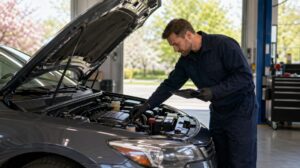
The good news? Most of the causes are diagnosable and fixable with the right tools or a trusted mechanic like Nelson Auto Repair.
Don’t wait for your car to leave you stranded. If your vehicle is sputtering, take action today to restore smooth, reliable performance and protect your engine from long-term damage. 🛠️🚗