What to Do if You Have a Flat Tire in Naperville
A flat tire can happen at the worst time. You might be driving to work, picking up kids, heading down Ogden Avenue, or getting on I-88 when the tire pressure light comes on or your car starts pulling to one side. If you are in Naperville and you get a flat tire, the most important thing is to stay calm, get to a safe place, and avoid making the damage worse.
A flat tire is not always just a tire problem. It can also point to a slow leak, rim damage, valve stem issue, pothole damage, or worn tread. Around Naperville, we see flat tires from nails, road debris, cold weather pressure drops, and potholes after winter. Here is what you should do next.
Flat Tire Warning Signs Before It Goes Completely Flat
Sometimes a tire goes flat fast. Other times it gives you warning signs first.
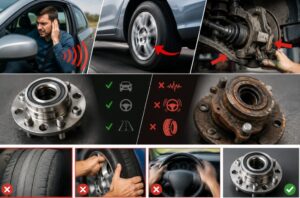
Watch for these signs:
- Low tire pressure light on the dash
- Car pulling left or right
- Thumping sound while driving
- Steering wheel vibration
- Tire looks low or soft
- Hissing sound near the tire
- Car feels heavy or hard to steer
If you notice any of these, slow down and find a safe place to stop. Driving too far on a low tire can damage the sidewall, wheel, and suspension.
What to Do First if You Get a Flat Tire in Naperville
If you think you have a flat tire, do not slam on the brakes. Keep both hands on the wheel and slow down slowly. Turn on your hazard lights. Look for a safe place to pull over.
Good places to stop include:
- A parking lot
- A side street with room to park
- A gas station
- A wide shoulder away from traffic
Try not to stop on a narrow road, curve, hill, or busy shoulder if you can avoid it. Naperville traffic can get heavy, especially near Route 59, Ogden Avenue, Washington Street, and I-88 ramps. Your safety comes first.
Do Not Drive Far on a Flat Tire
This is one of the biggest mistakes drivers make. If the tire is fully flat, driving even a short distance can ruin it.
Driving on a flat tire can cause:
- Sidewall damage
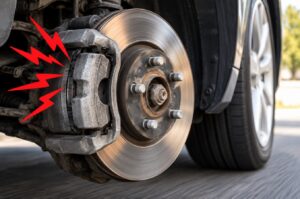
- Bent wheel or rim damage
- TPMS sensor damage
- Brake and suspension stress
- Loss of control
- A more expensive repair
If the tire is only slightly low, you may be able to add air and drive carefully to a nearby shop. But if it is flat to the ground, do not keep driving on it.
Check the Tire Pressure and Look for Damage
Once you are safely parked, look at the tire if it is safe to do so. Do not stand near traffic.
Check for:
- A nail or screw in the tread
- A cut in the sidewall
- A bubble on the tire
- A bent rim
- A tire that came off the bead
- A missing valve cap or damaged valve stem
If the sidewall is damaged, the tire usually cannot be repaired. If the puncture is in the tread area, it may be repairable depending on the size and location.
Should You Use a Spare Tire?
Many vehicles still have a spare tire, but some do not. Some newer cars only include a tire repair kit or inflator.
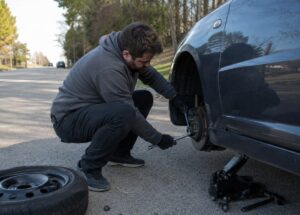
If you have a spare tire and know how to install it safely, it can help you get to a repair shop. But remember, most spare tires are temporary. They are not meant for long drives or high speeds.
A temporary spare usually has limits like:
- Drive under 50 mph
- Drive only a short distance
- Avoid highway speeds when possible
- Replace or repair the main tire soon
Before using a spare, check that it has air. A lot of people do not realize their spare tire is flat until they need it.
Flat Tire Repair Kit: When It Helps and When It Does Not
Some vehicles come with a sealant and air compressor kit. This can help with small tread punctures, but it is not a permanent fix.
A tire repair kit may help if:
- The puncture is small
- The leak is in the tread
- The tire is still on the rim
- There is no sidewall damage
A tire repair kit will not help if:
- The sidewall is torn
- The tire is shredded
- The rim is bent
- The hole is too large
- The tire came off the wheel
Sealant can also make tire repair messier later. If you use it, tell the repair shop so they know what is inside the tire.
Can a Flat Tire Be Repaired?
Sometimes yes. Sometimes no.
A tire may be repairable if the puncture is in the main tread area and is not too large. A proper tire repair usually includes a patch and plug from the inside of the tire. This seals the hole and helps keep air from leaking again.
A tire usually needs replacement if:
- The puncture is in the sidewall
- The tire was driven on while flat
- The tread is too low
- There is a bubble or bulge
- The tire has multiple punctures
- The damage is near the shoulder of the tire
At Nelson’s Service Inc., we can inspect the tire and let you know if repair is safe or if replacement is the better choice.
Naperville Flat Tire Causes We See Often
Flat tires in Naperville happen for many reasons. Some are random, but some are tied to local roads and weather.
Common causes include:
- Nails and screws from construction areas
- Pothole damage after winter
- Low tire pressure from cold weather
- Road salt corrosion around wheels
- Valve stem leaks
- Old tires with dry rot
- Uneven tire wear from alignment problems
Potholes can cause more than a flat. They can bend a wheel, knock the alignment out, or damage suspension parts. If your flat tire happened after hitting a pothole, it is smart to have the wheel and suspension checked too.
Why Your Tire Pressure Light May Come On Before a Flat
Your TPMS, or Tire Pressure Monitoring System, watches tire pressure. If one tire gets too low, the light comes on.
Do not ignore this light. It may be warning you before the tire goes completely flat.
The tire pressure light can mean:
- One tire is low
- Several tires are low from cold weather
- There is a slow leak
- A TPMS sensor is failing
- The tire was recently repaired or rotated and needs a reset
If the light comes back after you add air, there is likely a leak or sensor issue.
What to Keep in Your Car for a Flat Tire Emergency
A small emergency kit can make a flat tire much easier to handle.
Good items to keep in your car:
- Tire pressure gauge
- Portable air compressor
- Flashlight
- Gloves
- Reflective triangles or safety lights
- Phone charger
- Small towel or blanket
- Owner’s manual
- Roadside assistance information
In winter, also keep a warm coat, hat, and blanket in the car. A flat tire on a cold Naperville morning is much easier to handle when you are prepared.
Should You Call Roadside Assistance or a Repair Shop?
If you are on a busy road, do not risk changing the tire yourself. Call roadside assistance. It is not worth standing next to traffic.
Call for help if:
- You are on the highway
- The shoulder is narrow
- It is dark or raining
- The car is on uneven ground
- You do not have the right tools
- You are not sure the spare is safe
- The tire is badly damaged
Once the spare is on, schedule tire repair or inspection right away. A spare is only a short-term solution.
How Nelson’s Service Inc. Can Help With a Flat Tire in Naperville
If you have a flat tire, Nelson’s Service Inc. can inspect the tire, check for leaks, test the TPMS sensor, and look for wheel or suspension damage. We can tell you if the tire is safe to repair or if it should be replaced.
We can also check tire pressure, tread depth, alignment wear, and other signs that may have caused the flat in the first place. If you are not sure what happened, start with a vehicle inspection so we can find the real issue and help prevent it from happening again.
Schedule Flat Tire Help With Nelson’s Service Inc.
A flat tire is stressful, but the next step does not have to be confusing. If your tire is low, leaking, damaged, or your tire pressure light keeps coming on, bring your vehicle to Nelson’s Service Inc. We will inspect it, explain your options clearly, and help you get back on the road safely.
For Naperville flat tire help, tire inspection, TPMS testing, or a full vehicle checkup, contact Nelson’s Service Inc. today.