A wheel bearing is one of those parts you do not think about until it starts making noise. Then all of a sudden you are like, what is that humming sound? A bad wheel bearing can start small, but it can turn into a real safety issue if you keep driving on it too long. Around Naperville and the western suburbs, we see wheel bearing problems a lot after pothole season, curb hits, and long winter salt exposure.
This guide will help you figure out the signs of a bad wheel bearing, how the noise usually sounds, what you can check at home, and when it is time to replace it.
What Is a Wheel Bearing and What Does It Do?
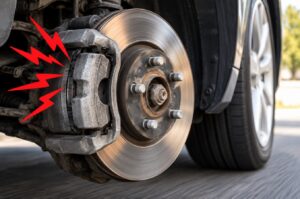
A wheel bearing is a set of steel balls or rollers inside a metal race. It sits in the wheel hub area and lets the wheel spin smoothly with very little friction. It also supports the weight of your vehicle.
Most modern cars use a sealed wheel bearing or a hub assembly. That means it is packed with grease and sealed up. You usually do not repack it like old school bearings. When it fails, it is typically replaced as a unit.
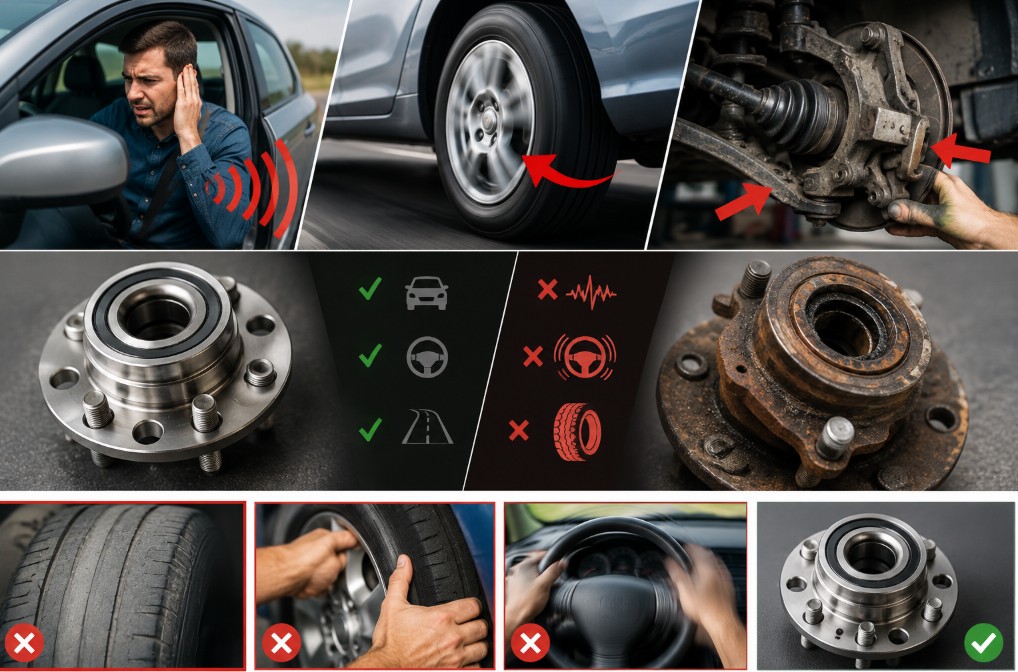
Bad Wheel Bearing Symptoms and Noises You Should Not Ignore
The most common symptom is noise. But the type of noise matters.
Common wheel bearing noise symptoms:
- Humming or droning that gets louder as speed increases
- Growling or grinding sound, especially at 30 to 60 mph
- Noise that changes when you turn left or right
- Vibration in the steering wheel or seat
- A feeling like the car is not rolling smooth
If the bearing gets really bad, you can hear a rough grinding sound. That is usually a sign it is already pretty far gone.
Wheel Bearing Noise vs Tire Noise: How to Tell the Difference
This is where people get stuck, because tire noise and wheel bearing noise can sound similar.
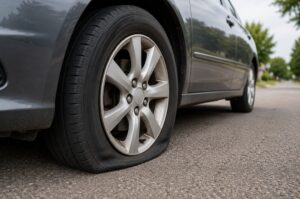
Tire noise usually changes based on the road surface. New asphalt might be quiet, rough concrete might be loud. You may also see uneven tire wear like cupping or feathering.
Wheel bearing noise usually changes with turning. When you turn, the car’s weight shifts. If the bearing is worn on one side, the noise can get louder when you load it, and quieter when you unload it.
Quick example:
- If the noise gets louder when turning left, it may be the right bearing (because the right side is loaded more in a left turn).
This is not 100 percent every time, but it is a very common pattern.
Wheel Bearing Failure Signs During Turns and Lane Changes
A worn wheel bearing can make the car feel a little unstable. It is not always obvious at first, but you might notice:
- A slight wobble feeling when changing lanes
- The steering feels less tight at higher speed
- The car feels “floaty” on the highway
- Clicking or clunking if the bearing has a lot of play
If you feel looseness plus noise, it is time to get it checked fast.
How to Check a Wheel Bearing at Home Safely
If you are comfortable and safe doing it, here are a few simple checks.
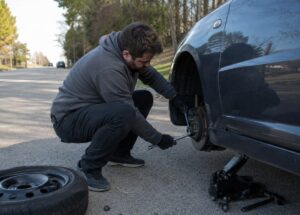
- Find a safe spot. Set the parking brake.
- Jack the car up properly and use a jack stand. Do not trust the jack alone.
- Grab the tire at 12 and 6 o’clock and rock it.
- Then grab at 3 and 9 o’clock and rock it.
If you feel looseness at 12 and 6, that can be wheel bearing play, but it can also be ball joints on some cars. If you feel looseness at 3 and 9, it may be tie rods or steering parts. So this is not a perfect test, but it can give clues.
You can also spin the wheel by hand and listen. A bad bearing can sound rough, like sand in there, or you can feel a gritty rotation. Some bearings fail without play though, so a quiet spin does not always mean it is good.
What Causes Wheel Bearings to Wear Out?
Wheel bearings wear out for a few reasons:
- Normal mileage and age
- Pothole hits and rough roads
- Water intrusion (deep puddles, floods)
- Rust and corrosion from road salt
- Improper installation on a previous repair
- Driving with bad tires or bad alignment for too long
In this area, potholes are a big one. One hard hit can damage a bearing and you might not hear it for weeks. Then it slowly gets louder.
Is It Safe to Drive with a Bad Wheel Bearing?
For a short drive to the shop, sometimes yes. But it depends on how bad it is.
If it is a mild hum, you might have some time, but do not ignore it. Bearings can go from “annoying sound” to “grinding” faster than people think.
If it is grinding, or you feel wobble, that is a no. At that point you are risking:
- Wheel hub damage
- ABS sensor issues
- Rotor and brake wear
- In extreme cases, the wheel can lock up or come loose
That is rare, but when it happens it is scary. It is not worth pushing it.
Wheel Bearing Replacement: What the Repair Usually Looks Like
Most vehicles today use a hub assembly with the bearing built in. The technician removes the wheel, brakes, and hub bolts, then installs the new hub/bearing assembly. Some cars use a press-in bearing, which takes more labor and special tools.
During replacement, we also check:
- ABS sensor and tone ring condition
- Axle nut torque and hardware
- Brake rotor and pad wear
- Suspension play that could have caused extra stress
If you have a wheel bearing noise, it is smart to do a full check so you do not fix one thing and miss the real cause. That is why we recommend starting with a full inspection on our vehicle inspections page.
Wheel Bearing Replacement Cost Factors and Why Prices Vary
Wheel bearing replacement costs vary because of:
- Hub assembly vs press-in bearing
- Rust level on bolts and knuckles (winter salt makes this worse)
- AWD vs FWD vs RWD setups
- Whether the bearing includes the ABS sensor
- Labor time based on vehicle design
In Illinois, rust can add time. Seized bolts are a real thing. It is not fun, but it is reality around here.
When Should You Replace a Wheel Bearing?
You should plan on replacement when:
- You have a steady hum or growl that changes with speed
- Noise changes with turning and keeps getting worse
- You feel vibration or looseness
- ABS light comes on and the bearing has an integrated sensor
- Grinding noise starts
If you are not sure, do not guess. A quick road test and lift inspection can confirm it.
Get Your Wheel Bearing Checked at Nelson’s Services Inc
If you think you might need a wheel bearing replacement, let us take a look before it turns into a bigger issue. At Nelson’s Services Inc we see wheel bearing problems all the time around Naperville, especially after pothole season. We can test drive, pinpoint the noise, inspect the hub, and give you a clear plan. Start with our vehicle inspections and we will help you figure out what is really going on with your car.