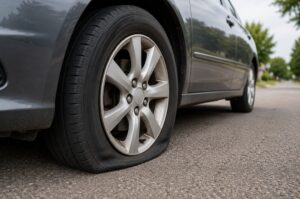
Knowing how to change a tire is one of those basic car skills that can really save you. A flat tire can happen anywhere. It may happen in your driveway, at work, in a parking lot, or on the side of the road. If you have the right tools and a safe place to work, you may be able to install your spare tire and get moving again.
But safety comes first. If you are on a busy road, near traffic, in bad weather, or unsure what to do, call for help. A tire can be replaced. Your safety matters more.
How To Change a Tire Safely
Before you start, make sure your vehicle is in a safe spot. Pull as far away from traffic as you can. Turn on your hazard lights. Park on level, solid ground. Do not try to change a tire on a hill, soft shoulder, or icy surface.
Set the parking brake. Put the car in Park if it is automatic. If it is a manual, put it in gear. If you have wheel wedges, place them around the tires that are staying on the ground. This helps keep the vehicle from rolling.
Tools Needed To Change a Flat Tire
Most vehicles with a spare tire should have a jack, lug wrench, and spare tire. Some newer cars do not include a spare. They may have a tire inflator kit instead. Check your trunk, cargo area, or under the vehicle so you know what you have before you need it.
Here is a simple tire change checklist:
- Spare tire, jack, lug wrench, vehicle owner’s manual, flashlight, gloves, wheel wedges, and a tire pressure gauge
Your owner’s manual is important because it shows the correct jack points. Using the wrong spot can damage the car or make the vehicle unstable.
Step 1: Loosen the Lug Nuts Before Lifting the Car
Before you raise the vehicle, loosen the lug nuts slightly. Do not remove them yet. Use the lug wrench and turn each lug nut counterclockwise.
This can take some force. If they are tight, use steady pressure. Do not jerk the wrench if the car is unstable. The goal is to break the lug nuts loose while the tire is still on the ground. This keeps the wheel from spinning.
Step 2: Place the Jack in the Correct Jack Point
Find the correct jack point near the flat tire. Most vehicles have reinforced areas under the frame or pinch welds. Your owner’s manual will show the right location.
Place the jack on firm, level ground. Make sure it sits straight. Then slowly raise the vehicle until the flat tire is a few inches off the ground.
Never place any part of your body under the vehicle while it is held up only by the jack. A factory jack is made for changing a tire, not for working under the car.
Step 3: Remove the Lug Nuts and Flat Tire
Once the tire is off the ground, remove the loosened lug nuts the rest of the way. Keep them in a safe spot so they do not roll away.
Pull the flat tire straight toward you. If it sticks, gently rock it side to side. Rust and road salt can make wheels stick to the hub, especially around Naperville and the Chicago suburbs after winter. Be patient and keep your balance.
Step 4: Install the Spare Tire
Line up the spare tire with the wheel studs. Push it onto the hub until it sits flat. Then reinstall the lug nuts by hand.
Tighten them by hand first. This helps prevent cross-threading. Once all lug nuts are started, snug them with the lug wrench. Do not fully tighten them while the vehicle is still in the air.
Step 5: Lower the Vehicle and Tighten the Lug Nuts
Lower the vehicle slowly until the spare tire touches the ground. Once the tire is stable and the vehicle weight is mostly on it, tighten the lug nuts.
Use a star pattern. This helps the wheel seat evenly against the hub. Tighten one lug nut, then move across to the opposite one, and keep going until all are tight.
After that, lower the vehicle completely and remove the jack. Give each lug nut one final firm tighten.
Step 6: Check the Spare Tire Pressure
A spare tire is only helpful if it has enough air. Many people never check their spare, so it may be low when they need it.
Use a tire pressure gauge if you have one. Temporary spare tires often need much higher pressure than regular tires, sometimes around 60 PSI. Check the tire sidewall or owner’s manual for the correct pressure.
If the spare is low, drive carefully to a nearby air pump or repair shop.
How Fast Can You Drive on a Spare Tire?
Most temporary spare tires are not made for normal driving. They are smaller, lighter, and designed to get you to a shop.
Many temporary spares have a limit of about 50 mph. They are also not meant for long trips. Avoid highway driving if possible. Do not tow with a temporary spare. Do not drive for days on it unless your owner’s manual says it is safe.
A full-size spare is better, but it still needs to match your vehicle and have proper tread and pressure.
What To Do With the Flat Tire
Put the flat tire, jack, and tools back in the vehicle. Do not leave the damaged tire behind.
A flat tire may be repairable if the puncture is in the tread area and the tire was not driven on while flat. But if the sidewall is torn, the tread is too low, or the wheel is damaged, the tire may need to be replaced.
Bring the tire to a repair shop as soon as possible. Driving too long on a spare can create more problems.
When You Should Not Change a Tire Yourself
Do not change a tire yourself if the vehicle is too close to traffic, the ground is soft or uneven, the weather is dangerous, or you do not have the right tools. Also avoid doing it if the lug nuts will not loosen, the spare looks damaged, or you feel unsure.
Call roadside assistance instead. It is always better to be safe than to risk injury.
Naperville Tire Problems From Potholes and Road Salt
In the Naperville area, flat tires are often caused by potholes, nails, screws, road debris, and slow leaks around the wheel bead. Winter road salt can also cause corrosion on wheels, which may lead to air leaks.
If your flat happened after hitting a pothole, have the tire, wheel, alignment, and suspension checked. A hard hit can bend a rim or damage steering parts. The tire may not be the only problem.
A good inspection can help catch these issues early. Nelson’s Service Inc. can check for tire damage, wheel leaks, TPMS problems, and suspension concerns through our vehicle inspections.
Why Lug Nut Torque Matters After Changing a Tire
After installing a spare or repaired tire, the lug nuts should be tightened to the proper torque spec. Too loose can be unsafe. Too tight can stretch studs or make the next tire change harder.
A shop can torque the lug nuts correctly with a torque wrench. This is a smart step after any roadside tire change.
Get Tire Help From Nelson’s Service Inc.
Changing a tire can get you out of a tough spot, but it is only a temporary fix if you are using a spare. Nelson’s Service Inc. can inspect the flat tire, check for leaks, test the TPMS system, measure tread depth, and look for wheel or suspension damage.
If you had a flat tire in Naperville or you are not sure your spare is safe, bring your vehicle in for a tire and safety check. Nelson’s Service Inc. will help you get the right repair and get back on the road with confidence.