Car Pulls to One Side: Alignment, Tires, or Sticking Caliper?
A vehicle that drifts or yanks to one side is more than an annoyance—it’s a safety and tire-wear problem waiting to happen. The root cause is usually in one of three buckets: wheel alignment, tire/tire pressure issues, or a brake problem like a sticking caliper. Below is a practical, shop-grade guide to pinpointing the cause and fixing it fast.
Quick Diagnosis: Does the Pull Happen During Acceleration, Cruising, or Braking?
Cruising pull often points to wheel alignment, tire conicity, or tire pressure imbalance.
Braking pull typically indicates a sticking brake caliper, collapsed brake hose, or seized slide pins.
Acceleration pull on front-wheel-drive cars can involve torque steer, unequal axle angles, or worn engine/trans mounts.
Pro tip: Find a flat, low-traffic road. Center the steering wheel, lightly loosen your grip, and note whether the vehicle drifts. Then repeat while braking from 35–25 mph to see if the behavior changes.
Wheel Alignment: Camber, Caster, Toe, and Thrust Angle Keywords
Camber: If one front wheel has more positive camber, the car tends to pull toward that side. Excess negative camber can also create a drift via tire edge loading.
Caster: Cross-caster (more positive caster on one side) can cause the vehicle to drift toward the side with less positive caster.
Toe: Toe-out on one side can create a steering lead and rapid feathered wear.
Thrust Angle: If the rear axle isn’t square to the chassis, the car “dog-tracks,” forcing you to hold the wheel off-center.
Fix: A four-wheel alignment sets camber, caster, toe, and thrust angle to spec. On strut cars, camber bolts or slotted struts may be required. Bent components (control arms, knuckles, subframe shifts) must be corrected before alignment will “hold.”
Tires and Tire Pressure: Conicity, Radial Tire Pull, and Wheel Balance Keywords
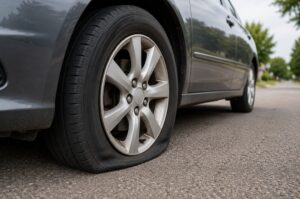
Unequal Tire Pressure: Even a 2–3 PSI difference left to right can create a noticeable drift. Always set pressures to the door placard (cold).
Tire Conicity/Radial Pull: Some tires develop a built-in “cone” shape that leads the car. A classic test is a front-to-front side swap: if the pull flips sides with the tire, you’ve found the culprit.
Tread Separation and Belt Shift: A slightly shifted belt can cause a constant lead plus vibration. Inspect the inner shoulders—issues often hide there.
Wheel Balance and Radial Force Variation: Imbalances won’t usually cause a steady pull, but severe radial force variation can combine with alignment to create a lead.
Fix: Correct pressures, rotate or swap sides, and replace any tire that causes the pull to change sides. Road-force balancing can diagnose high radial force variation.
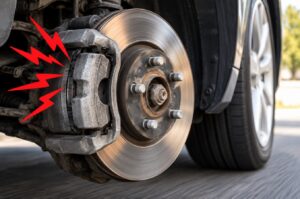
Sticking Brake Caliper: Seized Slide Pins, Collapsed Hose, and Brake Drag Keywords
Brake drag on one corner pulls the vehicle toward that side under braking and can persist while cruising if severe.
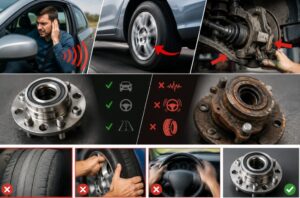
Clues: Hot wheel on one side, uneven pad wear, dark/bruised rotor color, burning smell after a short drive.
Slide Pins and Abutment Clips: Corrosion or lack of lubrication prevents even pad release.
Collapsed Brake Hose: The inner liner acts like a one-way valve—pressure goes in but doesn’t release, keeping the caliper applied.
Caliper Piston Corrosion: Torn dust boots invite moisture; pistons stick in the bore.
Fix: Free and lubricate slide pins with high-temp synthetic grease, replace abutment hardware, and if drag returns, install a new hose and/or caliper. Always service in axle pairs and bed pads/rotors properly.
Suspension and Steering: Ball Joints, Control Arms, and Electric Power Steering Keywords
Worn Lower Control Arm Bushings: Allow fore/aft wheel movement, changing toe under load and causing a lead.
Bent or Cracked Arms/Knuckles: After pothole or curb strikes, geometry shifts cause chronic pull and rapid tire wear.
Ball Joints/Tie Rod Ends: Excessive play makes the car follow road crown and grooves.
Electric Power Steering (EPS) Bias: Rarely, EPS torque sensors or software offsets create a steering lead that alignment alone won’t fix.
Fix: Replace worn components, then align. For EPS issues, a scan tool can perform a steering angle sensor reset or EPS calibration.
Road Crown, Crosswinds, and Load: Normal vs. Abnormal Lead Keywords
Most roads are crowned for drainage; a slight right drift on multi-lane roads can be “normal.”
Crosswinds and roof loads can add perceived pull. Evaluate on different roads and directions to separate vehicle faults from environment.
DIY Checks Before the Shop: Tire Pressure, Tire Swap, and Brake Heat Keywords
Set tire pressures cold to the placard value; recheck after a week.
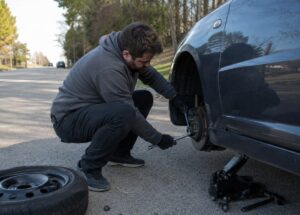
Swap the two front tires left-to-right. If the pull changes sides, suspect tire conicity or a belt issue.
After a short drive without heavy braking, cautiously feel wheel centers (or use an IR thermometer). One wheel much hotter suggests brake drag.
Inspect tires for inner-edge wear, cupping, or feathering—these patterns point toward alignment and suspension issues.
Professional Diagnosis: Alignment Printouts and Brake/Tire Testing Keywords
Four-wheel alignment with printout: Review camber, caster, toe, and thrust angle. Look for cross-camber or cross-caster beyond manufacturer’s cross-spec limits.
Road-Force Test: Measures radial force variation and can match the tire high spot to wheel low spot to minimize lead.
Brake Inspection: Measure rotor runout, check pad thickness inner vs. outer, test slide mobility, and perform a hose “pinch” test to confirm a collapsed hose.
Steering Angle Sensor Calibration: Ensures EPS and stability control read the wheel straight-ahead correctly.
Safety and Tire Wear: Why Fixing a Pull Matters for Braking Distance Keywords
A pulling vehicle increases stopping distance because one axle or wheel does more work, triggering early ABS on that side.
Tire scrub from misalignment overheats and thins tread, reducing wet-road grip.
Brake drag warps rotors and cooks pads, leading to fade and longer stops. Correcting the root cause restores straight-line stability and predictable emergency braking.
Typical Repair Paths and Costs: Alignment, Tires, and Caliper Service Keywords
Alignment Only: Corrects thrust angle/toe/camber if parts are healthy.
Tire Replacement: Replace any tire that “moves” the pull when swapped. Consider replacing in pairs or a full set to keep rolling diameters equal.
Brake Service: Free/grease slide pins, replace hardware, hoses, or calipers as needed; resurface or replace rotors and install quality pads.
Suspension Parts: Control arms (with bushings/ball joints), tie rods, and struts may be needed before alignment can hold.
Call to Action: Schedule Pull Diagnosis and Repair at Nelson Auto Repair
If your car pulls left or right, don’t fight the wheel—fix the cause. Book a comprehensive pull diagnosis at Nelson Auto Repair. We’ll set tire pressures, road-test, measure alignment, check brakes for drag, inspect suspension play, and provide a clear, prioritized estimate. Drive straight, stop shorter, and save your tires—schedule with Nelson Auto Repair today.