Car A/C Blows Warm at Idle? 9 Causes and Fixes
When your A/C is ice-cold while cruising but turns lukewarm at a stoplight, you’re dealing with a classic airflow/pressure problem. At idle, there’s less natural air moving across the condenser and the compressor is spinning slower—so any weakness in the system shows up fast. Below are the nine most common causes, how to diagnose them, and what it takes to fix each one.
Quick 60-Second Self-Check
- Turn the A/C to MAX, recirc ON, fan HIGH.
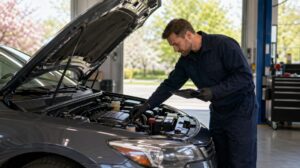
- Pop the hood and look: is the A/C clutch engaging (front of compressor spins)?
- Are the cooling fans (radiator/condenser fans) running continuously with A/C on?
- Is the condenser face (in front of radiator) packed with leaves/bugs?
- Watch the engine temp gauge—does it creep up at idle?
- Note symptoms: cold while moving, warm at idle; any squeals, clicks, or odors.
If fans don’t run with the A/C on, or the engine temp climbs at idle, skip to Causes 1 and 6 first.
1) Condenser/Radiator Fans Not Running or Too Weak
Why it causes warm-at-idle: With little vehicle speed, the condenser relies on electric fans to shed heat. If the fan(s) are dead, slow, or intermittent, high-side pressure spikes and vent temps rise.
Clues: A/C warms at idle, improves immediately when driving; fans don’t kick on with A/C; engine may run hotter in traffic.
DIY checks:
- With A/C ON, confirm both fans (or the single combo fan) spin.
- Inspect fan connectors/fuses/relays.
- Listen for a fan that starts then slows (weak motor).
Fix: Replace failed fan motor/assembly or relay, repair wiring.
Typical cost: $200–$700 parts + labor (varies by single vs. dual fans and access).
2) Low Refrigerant Charge from a Small Leak
Why it causes warm-at-idle: Low charge reduces mass flow and subcooling. At idle—when the compressor turns slower—you feel it most.
Clues: Gradual decline in performance over weeks/months; A/C cycles frequently; oily residue at hose crimps or fittings.
DIY checks:
- Look for dye/oil at service ports, condenser corners, compressor body.
- A single low-side gauge (DIY kit) often shows borderline readings at idle—but proper diagnosis needs a manifold set and ambient-adjusted charts.
Fix: Leak locate + repair (O-rings, condenser, hose), evacuate, recharge to spec with the correct refrigerant and oil.
Typical cost: $180–$450 for minor O-rings/service; $400–$900+ if condenser/line replacement needed.
3) Blocked or Bent Condenser Fins (Poor Airflow)
Why it causes warm-at-idle: Even with good fans, a clogged condenser face can’t reject heat efficiently at low speed.
Clues: Bugs/road debris packed into the condenser; bent fins; good airflow when driving masks the issue.
DIY checks:
- Flashlight inspection through bumper grille.
- Gently clean with low-pressure water from the engine side out; use a fin comb for bent areas.
Fix: Clean or straighten fins; replace the condenser if fins are crushed or leaking.
Typical cost: Cleaning time; condenser replacement $300–$800 installed.
4) Compressor Clutch Slipping or Belt/Drive Issues
Why it causes warm-at-idle: A glazed clutch or loose/bad belt can slip more at low RPM, reducing pumping capacity.
Clues: A/C cools better with slight throttle; chirp/squeal at engagement; visible clutch dust; intermittent engagement.
DIY checks:
- Watch the clutch plate—does it spin fully when commanded?
- Inspect belt condition/tensioner; look for wobble at compressor pulley.
Fix: Adjust/replace belt or tensioner; replace clutch or compressor assembly (many modern units are serviced as an assembly).
Typical cost: $150–$350 belt/tensioner; $700–$1,500 for compressor/clutch assembly.
5) Variable Displacement Compressor Control Valve (Solenoid) Fault
Why it causes warm-at-idle: Many modern compressors modulate output via a control valve. If the valve sticks, output at idle can drop to nearly nothing.
Clues: A/C cycles oddly; pressures don’t behave normally; better cooling at higher RPM; no obvious fan/airflow faults.
DIY checks:
- Electrical check of the compressor control circuit (power/ground/signal).
- Professional scan tool may show A/C command vs. response.
Fix: Replace the control valve (if serviceable) or the compressor; recharge.
Typical cost: $300–$900 valve or $800–$1,600 compressor installed.
6) Engine Overheating or Cooling System Weakness
Why it causes warm-at-idle: High coolant temps and under-hood heat raise condenser head pressure, forcing the A/C to back off or blow warm.
Clues: Temp gauge trending high in traffic; fans run but can’t keep up; coolant smell; old thermostat or clogged radiator.
DIY checks:
- Verify coolant level, cap integrity, and obvious leaks.
- Confirm fans switch to high speed with A/C on and at elevated temps.
- Ensure radiator fins are clean like the condenser.
Fix: Address cooling system: thermostat, radiator, fan high-speed circuit, water pump, cap, or flush.
Typical cost: $20–$60 cap/thermostat; $400–$900 radiator; $350–$800 water pump (varies by engine).
7) Metering Device Restriction (TXV/Orifice Tube) or Icing
Why it causes warm-at-idle: A restricted expansion valve/orifice tube limits refrigerant flow worst at low compressor speed. Moisture contamination can ice the valve at idle, thaw at cruise.
Clues: Periods of cold followed by sudden warm air; frost on lines; hissing at the dash; low low-side and low high-side pressures.
DIY checks:
- Visual for frost at TXV site or accumulator; beyond that, this needs gauges and recovery equipment.
Fix: Replace TXV/orifice and receiver-drier/accumulator; evacuate and recharge. Moisture ingress requires thorough evacuation.
Typical cost: $350–$900 depending on access.
8) Overcharge, Non-Condensables, or Contaminated Refrigerant
Why it causes warm-at-idle: Too much refrigerant or air in the system drives head pressure up; at idle there’s not enough condenser capacity to cope.
Clues: Recent “top-off” with unknown cans; compressor noisy; high high-side pressure and elevated low-side; safety cut-outs.
DIY checks:
- If the system was “guesstimated,” stop adding. Correct service requires recovery and a weighed charge.
Fix: Recover, vacuum (to remove air/moisture), and recharge by weight to factory spec; verify fan performance.
Typical cost: $180–$350 for proper evac/charge; more if other faults are found.
9) Electrical/Control Issues at Idle (Low Voltage, Relays, Idle Strategy)
Why it causes warm-at-idle: Weak alternator output, corroded grounds, failing A/C relays, or ECU load-shedding at low RPM can drop fan speed or disengage the clutch.
Clues: Dim lights at idle; A/C and fans perk up with a little throttle; intermittent clutch/fan operation; stored control module codes.
DIY checks:
- Battery/charging test (voltage ~13.7–14.7 V running).
- Inspect grounds and A/C clutch/fan relays; wiggle-test harnesses.
Fix: Repair charging/ground issues; replace faulty relays; address idle control problems.
Typical cost: $150–$500 alternator; $15–$40 per relay; variable for wiring repairs.
When It’s Safe to Drive (and When It’s Not)
- Generally safe: A/C only warm at idle, cools while moving, no overheating, no odd noises.
- Do not ignore: Engine temp rising, fans inoperative, burning smells, metallic compressor noises, or A/C that cuts out entirely. Overheating can cause engine damage—fix cooling and fan issues first.
Smart Maintenance to Keep A/C Cold All Summer
- Keep condenser/radiator fins clean; rinse gently seasonally.
- Replace the cabin air filter every 12–15k miles to maintain airflow.
- Service the cooling system on schedule (thermostat, coolant, radiator health).
- Avoid guess-charging—always charge by weight after proper evacuation.
- Fix small refrigerant leaks early; they worsen system wear and wash out oil.
Bottom Line
Warm air at idle is your A/C telling you something is marginal—usually fan airflow, refrigerant charge, or compressor control. A quick hood-up check can narrow it down, but proper diagnosis (fans, pressures, charge-by-weight) saves money and parts cannon frustration. If you are experiencing these issues than come into Nelson Auto Repair and one of our friendly technicians can help you out!